

How To Set Up Small Animal Trap
How to Apply Live Traps
This page is a general live trapping guide. Using the products and methods suggested, you will effectively trap animals. Follow this guide, employ the recommended products, and we guarantee 100% success with live trapping.
There are many treatment options when information technology comes to general animal control. Some people may want to control animals wandering in their house or in their k merely exercise not want to use poisonous substance, glue boards, or snap traps. Live trapping is a safe and efficient method of animal control. The brute is captured in the live trap and can easily exist relocated away from your property unharmed.
Be sure to check with your local animal control before releasing an animal.
If you lot want to become rid of animals in or around your home using a live trap, follow this DIY guide for production recommendations and instructions for constructive control.
Identification
It is important to know the blazon of animal you are dealing with. This information will help determine what size of live trap you demand, what you need to allurement with, likewise equally where you will need to place the trap.

Some of the about common unwanted animal activeness that people experience is from raccoons, opossums, rabbits, squirrels, and gophers. Identifying your particular pest fauna can sometimes be catchy, but you can tell different animals apart past their eating and living habits. Noting the size, shape, and organization of debris can also help with identification. For example, if you're seeing piles of droppings that expect like to dog feces, the animate being could exist a raccoon or opossum. If you find small-scale, sheathing-like droppings scattered around the yard or in the cranium, information technology could be a squirrel.
Most common wild animals are nocturnal, and so you volition notice most activeness after it gets dark. Animals similar raccoons, opossums, and rats or mice will unremarkably forage at dark in yards, garages, attics, or basements. If activity is seen or heard during the solar day, it is nearly likely a squirrel, chipmunk, or groundhog.
Pay attending to whether or not you meet nesting. These are most likely created past rodents. Groundhogs volition accept about of their activity near items that will acuminate their teeth, such as tree trunks. They volition as well create dirt mounds and couch holes. Raccoons are typically more aggressive and volition knock over heavier items such as trash cans for food.
Inspection
Afterwards correctly identifying the fauna you are dealing with, search for areas where they are most agile in or near your property. This will make up one's mind where you will set your live traps.
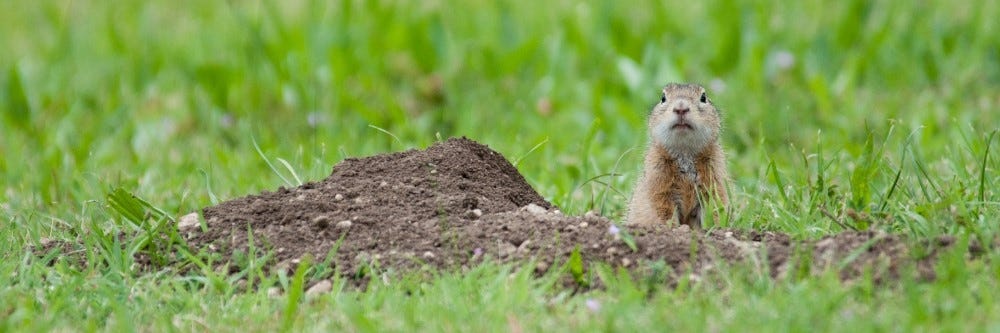
Where to Inspect
If y'all have whatsoever plants, fruits, or vegetables growing on your property, animals volition typically exist in this surface area. Animals volition also generally exist in areas that are well-hidden and dark with niggling human activeness. Yous may also meet signs of foraging activity in areas like garages that shop pet food, around h2o and food bowls for outdoor pets, or around trash cans.
What to Wait For
If the animals are inside your property, search for nests and burrows, as well every bit droppings. If the animals are agile enough on your property, the grass might leave a path where they usually footstep or yous might even see where grass is tamped downwards in areas where the animals rest. Check for unusual disturbances around trash cans or where there is pet food. Also await for any damage to vegetation, such as gnawed plant stems and trunks, eaten or disturbed fruits and vegetables, eaten or chewed leaves, or broken establish limbs.
Treatment
Alive traps are fix-to-apply products that come in different sizes. Your trap should exist big plenty for well-nigh of the animal'south body to fit before triggering the plate. However, it should not exist large enough for the animal to move around. This is to forbid the brute from potentially destroying or escaping from the trap. Exist certain to wear gloves when using or handling the live trap to avoid spreading human being smell. If animals odor a human'due south scent, they will avoid that expanse.
Step 1 - Place the Muzzle in High-Activity Areas
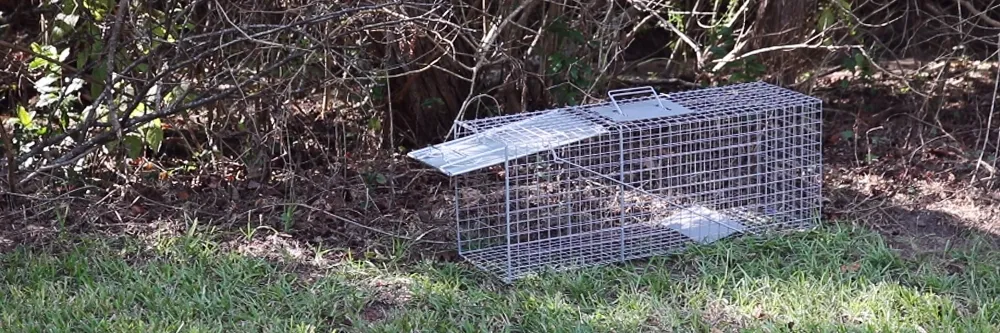
The stations should be placed near areas with high creature activity that yous noted during the inspection step, and that is relatively quiet with petty activity from humans or pets. This is usually at the edge of the belongings, most dense foliage or gardens, or near food and water sources. If possible, place the trap on a apartment, level surface in a shaded area. This volition forbid animals from being exposed to too much direct sunlight and overheating.
Pace 2 - Baiting the Station
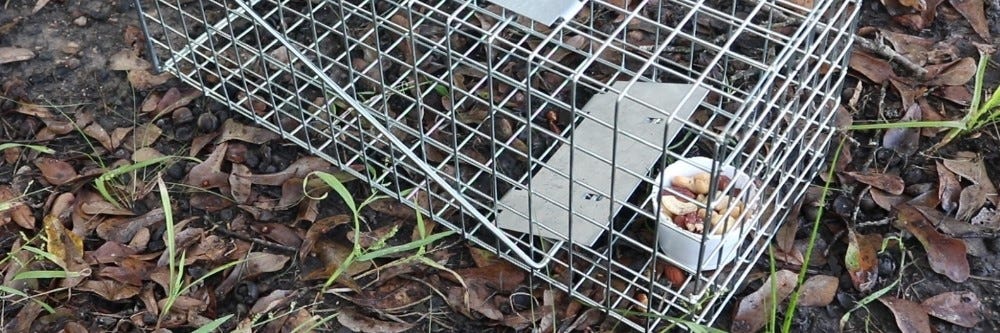
The bait you lot will use in the live trap volition depend on the animal y'all desire to catch. Desirable bait would be marshmallows for raccoons, cabbage for rabbits, peanuts for squirrels or chipmunks, cantaloupe for groundhogs, and either a squished banana or a honeybun with the wrapper open up for skunks or possums. It is not recommended to use strong-scented bait such every bit canned fish, as stray cats or neighborhood pets might find this appealing. For a simpler pick or if you lot are trying to capture a variety of animals, peanut butter works well as information technology is cheap, piece of cake to work with, and liked by many animals.
No matter which bait yous cull, information technology is important that it is placed behind the trap's trigger plate. This will brand sure that the animate being will put the majority of its body in the trap, and that they will footstep on the trigger plate as they piece of work their way toward the bait. Information technology can also be helpful to identify bait around the trap'south entrance to gain the creature'south trust and lead them into the trap.
Step 3 - Fix the Trap
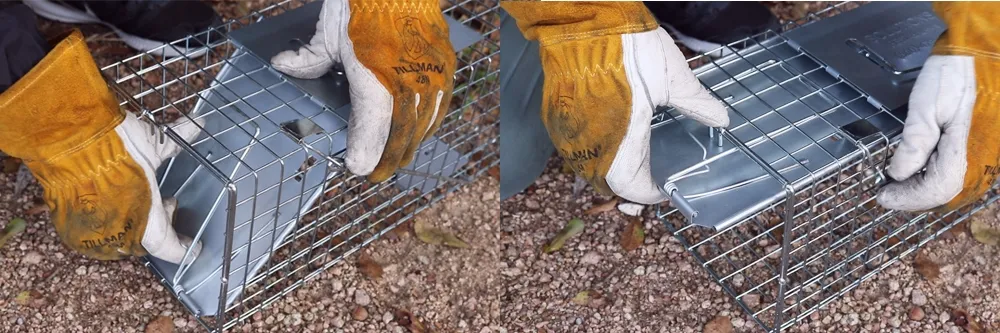
Be careful when setting the trap to avert pinching your fingers. With two hands, open the trap door by pushing on the door lock and lifting the door plate. Keep the door plate lifted while pulling the trigger arm forward to gear up it. You lot will know it is ready when the trigger arm's hook catches the door. The door should be held open and is at present ready for wild fauna to enter. Place your allurement at the end of the trap, backside the trigger plate.
Footstep 4 - Monitor the Live Trap

Cheque traps twice a day, preferably one time in the morning and once in the evening. Constantly being well-nigh the trap and checking it often will potentially dissuade animals from budgeted the trap. Practise not proceed an animal trapped for more than 24 hours.
Pace 5 - Safely Relocate the Animal
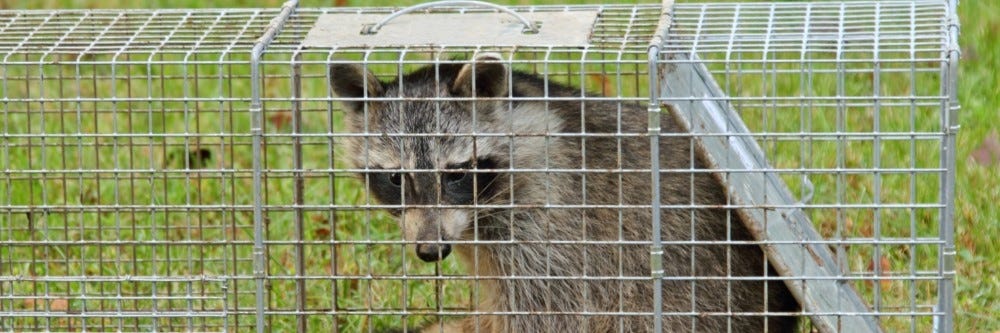
Release whatsoever non-target animals immediately. Once you have captured your desired animal in your live trap, check your local beast control to make sure you are correctly relocating the beast. Place a towel over the cage to avert frightening the animal. Carefully open up the trap and release the animal.
Prevention
After you lot've successfully used your live trap, there are a few preventative measures you lot tin take to brand certain you practise not have some other animal problem.
Sanitation
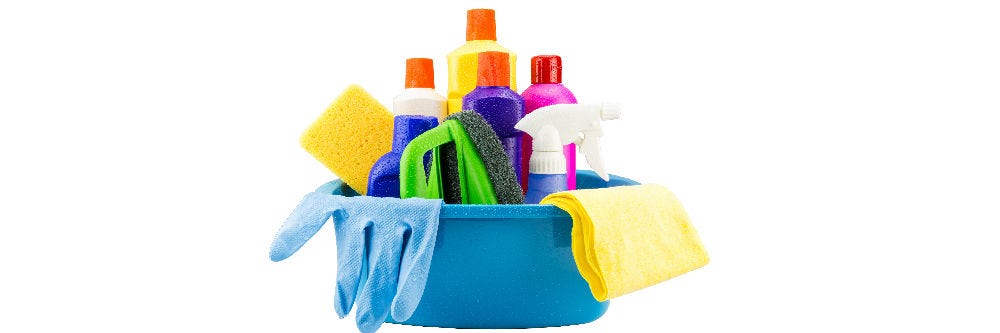
Maintaining a make clean expanse indoors and outdoors is an important step to take. Keep trash outdoors and in a tin can airtight with a hat. Remove any clutter or desbris from your belongings, equally this could exist used past animals for nests or burrows. Whatever potential nutrient sources such as pet food should be properly sealed in a container and stored away. Regularly check the property for spots that retain water.
Exclusion
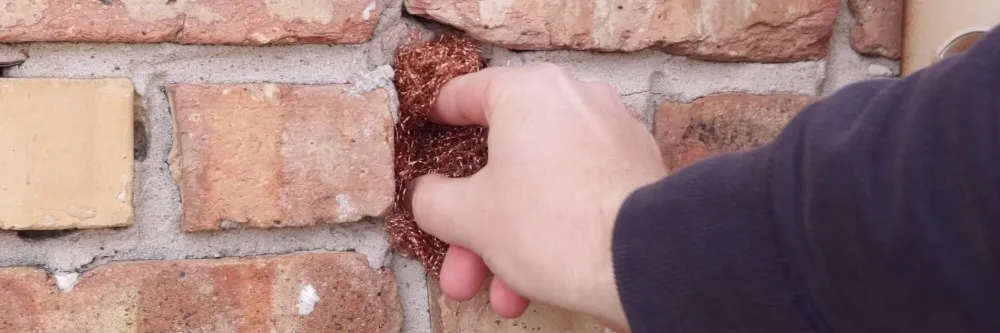
To avoid animals from entering your home, be certain to check the foundation for cracks and crevices. These can be sealed with Stuf-Fit Copper Mesh and caulk. Stuf-Fit is a breathable fabric that many animals cannot chew through. It will not rust and tin can exist stuffed into cracks and crevices before sealing with caulk. Repair whatsoever voids or openings around the habitation or construction, such every bit damaged screens around windows or basement wells, and damaged or battered fences.
Key Takeaways
- Successful trapping begins with successful identification. Do your best to correctly identify your animal pest as this will decide which size live trap you will demand, and the bait type and placement.
- Do your best to inspect the property for signs of creature activity then that you can get a sense of where the animals travel, harbor, or forage. This will aid you determine where to identify the alive trap for effective control.
- The Solutions Live Trap comes in 3 different sizes and should be large enough for the majority of the fauna'southward body to fit in the cage, simply not besides big to where it can roam effectually. Bait the station with the specific bait for the creature y'all're trying to catch, or peanut butter. Place the station in a shaded area.
- Check on the stations once during the twenty-four hour period and once at night. Refill bait when necessary until activity ceases.
- Prevent animals from entering your habitation with Stuf-Fit Copper Mesh and caulk, while maintaining a clean property to avoid animals using your clutter for nests or foraging for food.

How To Set Up Small Animal Trap,
Source: https://www.solutionsstores.com/how-to-use-live-traps
Posted by: rountreehisis1968.blogspot.com
0 Response to "How To Set Up Small Animal Trap"
Post a Comment